Nature.
A pause by the water, ribbons of garden flora, and birds above the city. Small encounters with the living world, away from the hurry.
11 PHOTOGRAPHS ↓Sometimes, looking is enough.
Three quiet frames that make space for a different pace.
A pause within the wider world
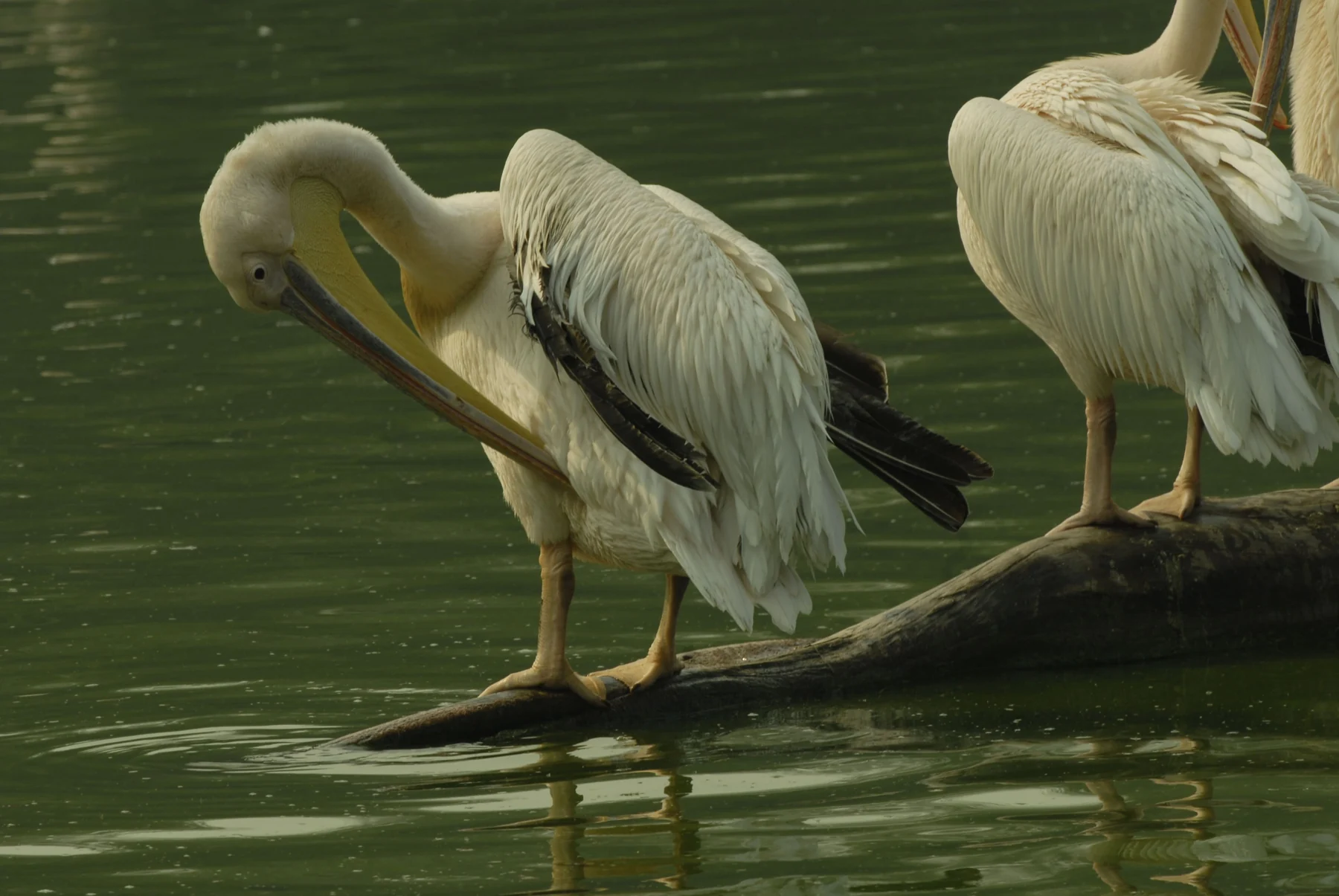
This is the smallest collection in the archive, and it invites the slowest pace. Two pelicans rest above green water; other birds perch on carved stone above a city. Water and architecture provide very different surroundings, yet both photographs turn attention towards the modest details of animal presence. With only two frames to move between, there is time to notice a curved neck, a pale wing, a perch and the space around them.
The pelicans share a log, but their postures differ: one holds its body upright while the other folds into the act of preening. In the city photograph, the birds are small against the carved surface beneath them and the blurred buildings beyond. Look at how each setting gives a resting animal its place. One frame gathers attention around water and rounded forms; the other sets living figures against the lines of human construction. The comparison makes this small collection a study in posture, habitat and the value of a pause.
Three things to look for
- 01
Compare the postures
The two pelicans occupy the same perch in different ways. Follow the line of each neck and notice how it changes the balance of the image.
- 02
Look beyond the bird
Green water and pale stone create contrasting surroundings. Consider how the background changes your sense of distance and stillness.
- 03
Give a small collection time
Move between the two frames, then return to the first. A second viewing often brings a previously unnoticed shape or relationship forward.
Above the City
The birds occupy a small part of the frame, perched on pale stonework above a softly blurred city. Look at the contrast between their living silhouettes and the carved surface: a quiet encounter between urban space and animal presence.
Read the related storyA different way
of looking.
No photographs match this search.