
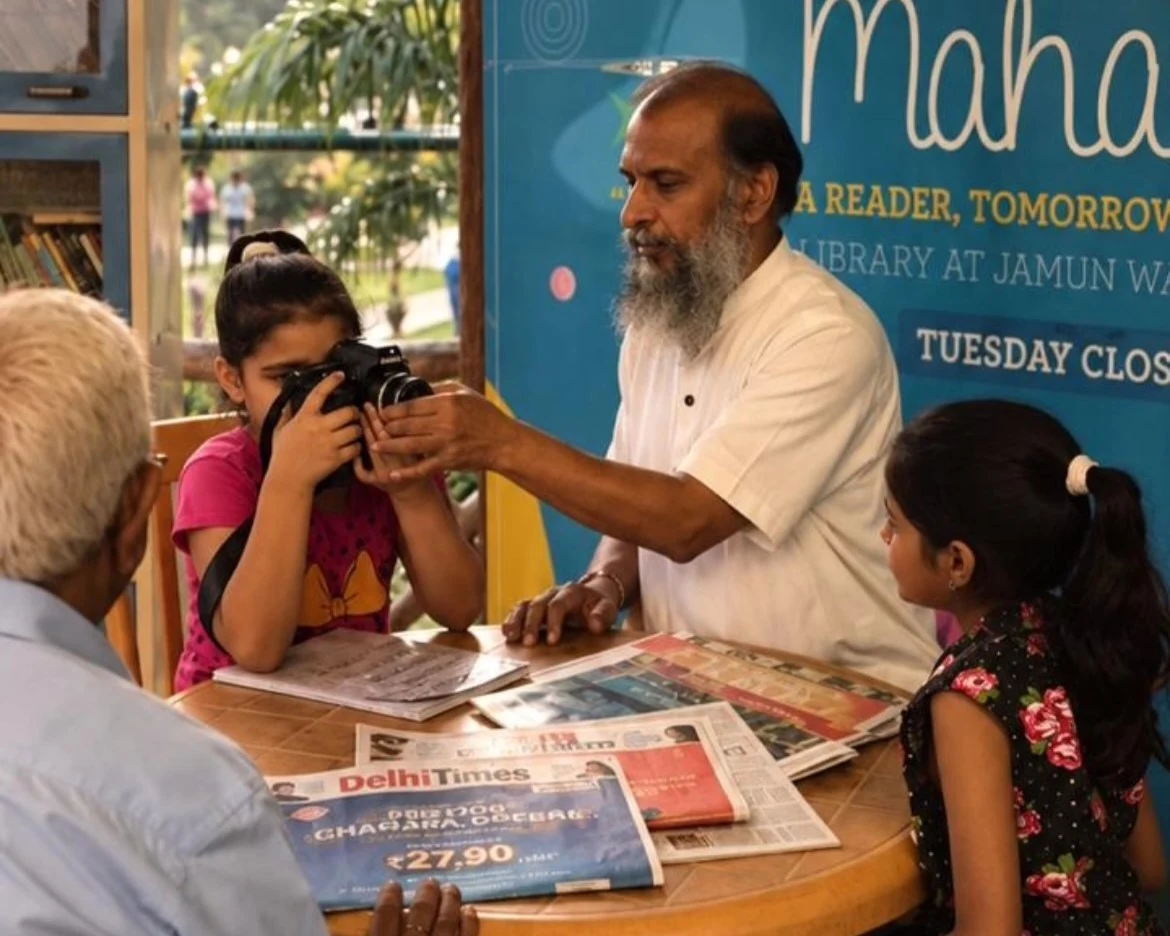
The original memorial includes accounts of Shashi working with children through photography and storytelling. These recollections describe creative activity within a larger relationship of care: taking time, building familiarity and making room for young people to participate. The camera appears as something to share, alongside books, conversation and other ways of expressing a view.
From being seen to choosing what to show
A youth and community tribute on the original site describes photography and creative storytelling workshops in which children were given cameras to explore their own neighbourhoods. The account places the emphasis on the children’s perspectives and the possibility of finding something worth showing close to home.
That is a meaningful change of position. A young person can be the subject of somebody else’s photograph; holding a camera allows them to make choices about the frame themselves. What enters the picture, what remains outside it and which detail receives attention become part of their own expression.
Creativity within a relationship
The Aarohan team’s recollection connects creative work with patience and relationships involving both children and parents. Photography did not appear as a separate activity whose purpose could be understood apart from the people taking part. The account remembers trust developing through the shared work around it.
At Pustak Mahal, the activities described include reading, taking photographs and playing a dhol. This combination gives the remembered setting its character: several forms of participation could exist together. The children were present as readers, image-makers and musicians, with more than one way to join in.
Making room for a point of view
The significance of accessible creative practice here is participation: an opportunity to use a medium, choose a subject and contribute something of one’s own. The memorial’s accounts emphasise personal relationships and encouragement rather than a formal teaching syllabus. Their detail lies in what people could do together.
For visitors to this archive, that idea offers a useful exercise. Choose an everyday detail in one photograph and consider the different story it might tell from another person’s position. This is a present-day invitation to look, inspired by the recollections, rather than a reconstruction of a lesson Shashi taught.